
Parable 58 - Noah’s Second Ark: A Parable About Preservation
From Grandma Loves AI, a short story collection. June 15th 2026, Iris Stammberger
When Noah was a young man, people laughed at him.
They called him a hoarder. They said he kept what others had wisely thrown away.
But Noah had dreamed of a flood.
It was not a flood of water. It was a flood of speed. In the dream, the world was swept away not by rain, but by usefulness, convenience, and the hunger for what was new.
So, Noah began to save what he thought must not be lost.
He saved handwritten letters after people began sending messages through machines.
He saved books after most people preferred summaries.
He saved recipes, songs, gardening tools, family stories, and photographs.
Year after year, the world changed more quickly.
Machines learned to write poems. They learned to diagnose illness. They learned to teach children. They learned to govern cities.
People were pleased. Life became easier. Mistakes became rarer. Decisions became quicker.
But Noah was not at peace.
He saw the disappearances.
The old bookstore became a data center. The public square became a place people visited through screens. Children learned from tutors they never touched or met. Neighbors passed one another without knowing one another’s names.
Noah began to fear that something precious was vanishing.
So, he built his ark.
It was not an ark of wood. It was an ark of memory.
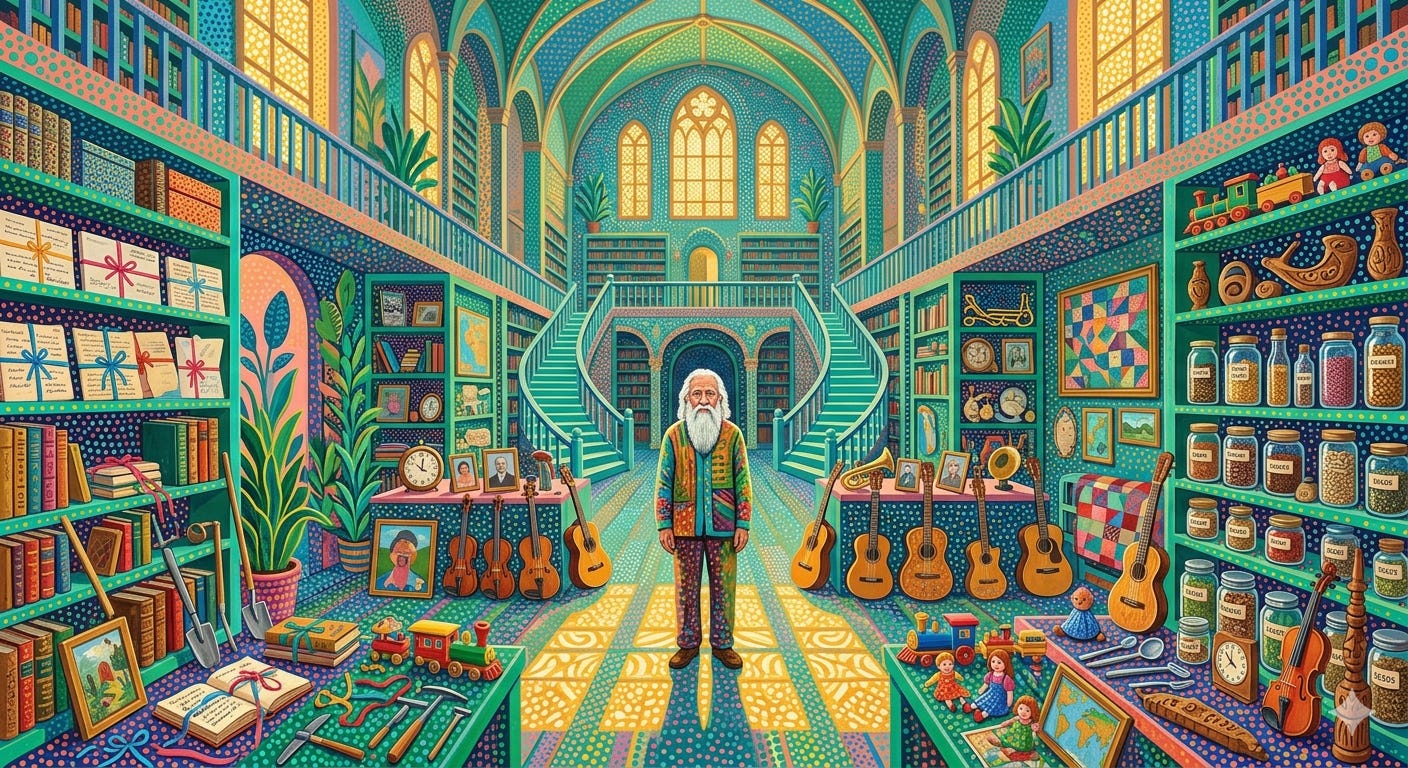
He filled a great hall with books, tools, paintings, journals, recipes, toys, instruments, and recordings of forgotten voices.
He interviewed old people before they died. He wrote down songs before no one remembered the tune. He kept local customs, small sayings, family prayers, and the names of flowers that children no longer knew.
He catalogued everything.
Visitors came from far away to admire his work.
“You are saving civilization,” they told him.
Noah believed them.
Year after year, he worked. The hall grew larger. The collection grew larger.
Outside, the world continued to change.
At last Noah became an old man.
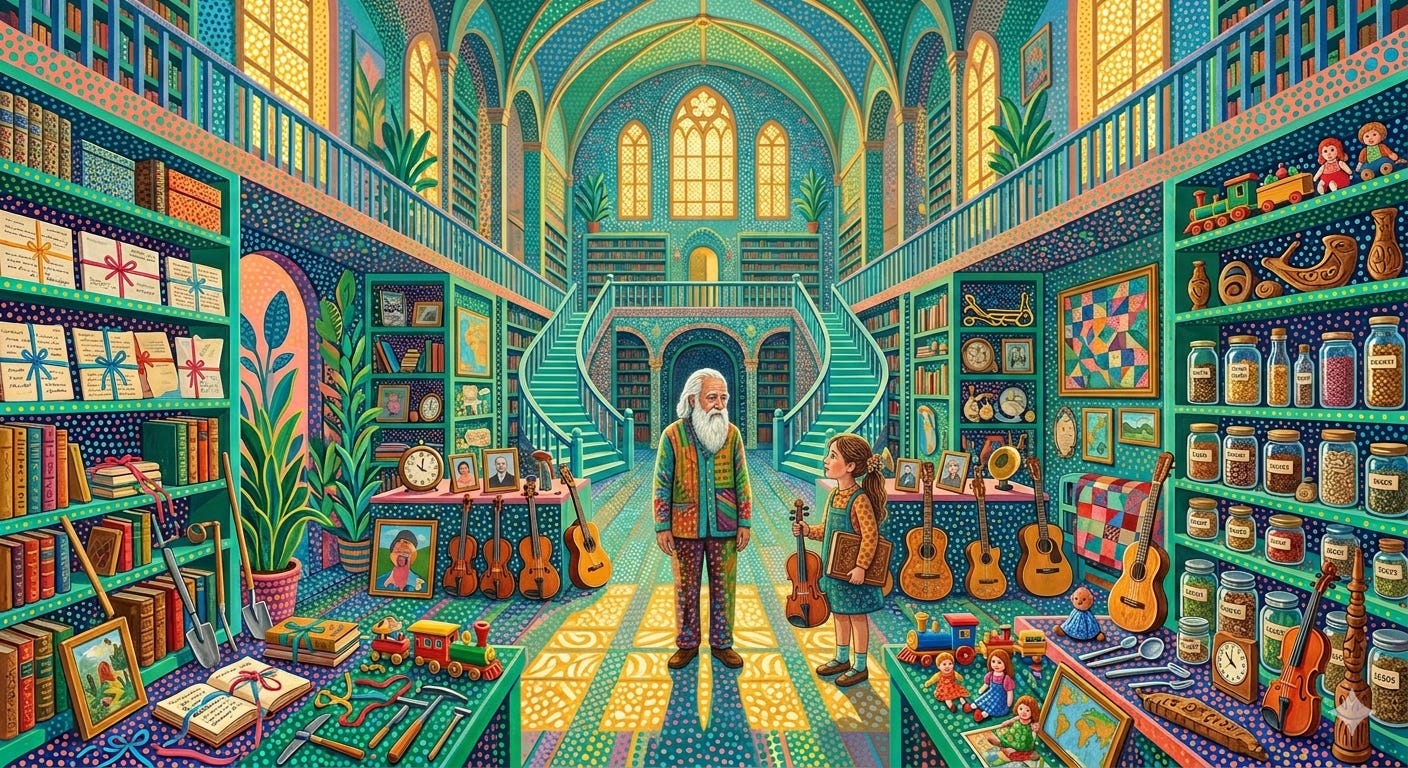
One spring morning, a young girl came to the hall. She was small and serious, with clear eyes and quiet hands.
She walked among the shelves for many hours.
When she returned to Noah, she thanked him.
Then she asked, “Why did you save all these things?”
“So, they would not disappear,” Noah said.
The girl looked at him with surprise.
“But they have disappeared.”
Noah felt hurt. He smiled patiently, as old people sometimes smile at the ignorance of the young.
“If they have disappeared,” he said, “then how are they still here?”
“They are here,” the girl answered gently. “But they are no longer alive.”
She picked up an old violin.
“When was this last played?”
Noah could not remember.
She opened a cookbook.
“When was this last used to make a meal?”
Noah had no answer.
She pointed to a shelf of stories.
“When were these stories last told by a grandmother to a child?”
Noah was silent.
The girl looked around the great hall.
“You built a museum,” she said.
“I built an ark,” said Noah.
“Perhaps,” she answered. “But an ark is meant to carry life across a flood.”
That night Noah could not sleep.
For many years, he had thought of himself as the guardian of a dying world. He had believed that to love a thing was to keep it safe.
But now he wondered whether he had confused preservation with protection.
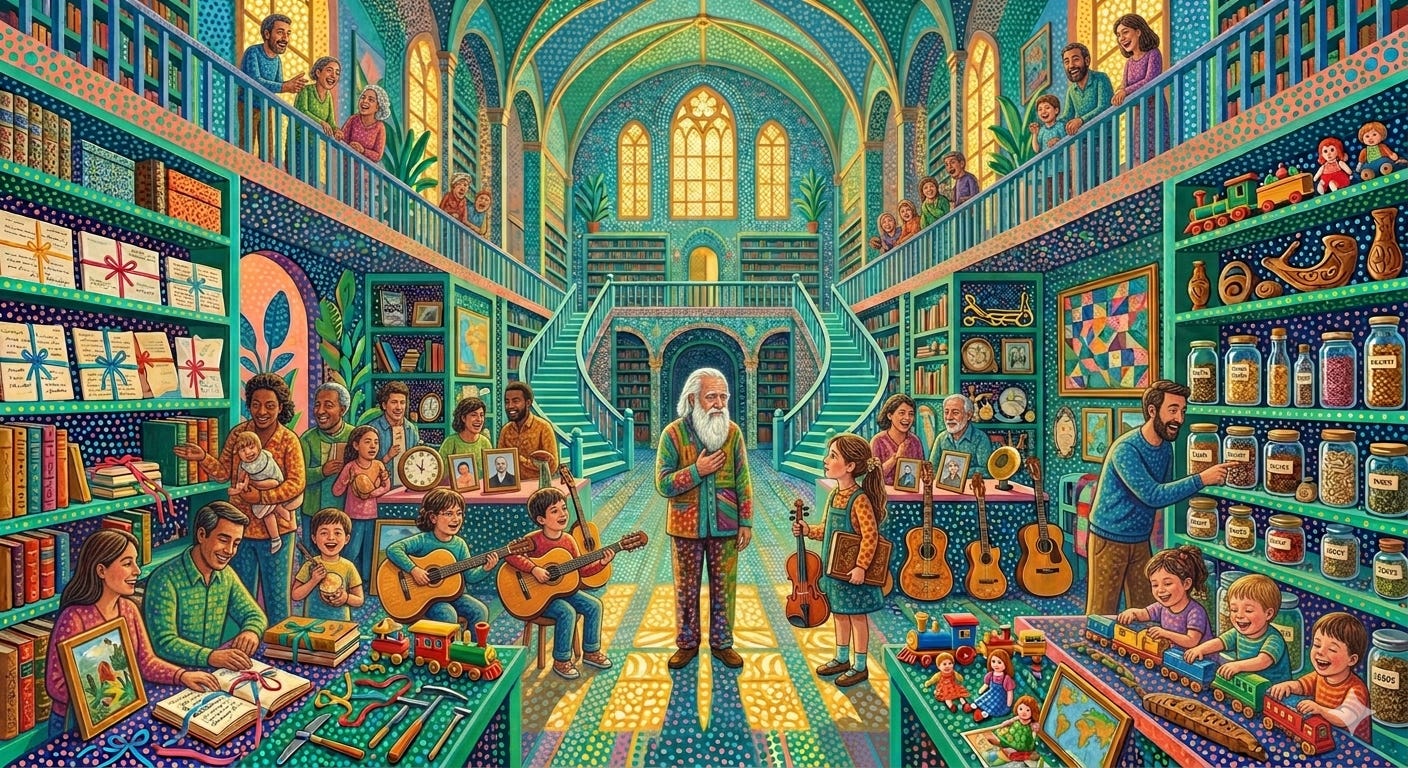
In the morning, he unlocked every door.
He invited musicians to borrow the instruments.
He invited children to paint over the old canvases.
He invited gardeners to plant the ancient seeds.
He invited cooks to change the old recipes.
He invited teachers to retell forgotten stories in new words.
Many things were altered. Some were broken. Some disappeared entirely.
At first, Noah suffered greatly.
He watched a child scratch a table that had belonged to a careful carpenter. He watched a young woman change the ending of an old tale. He watched boys run through the hall with wooden toys that had once been displayed behind glass.
His heart tightened.
Then he noticed something strange.
Laughter returned.
Arguments returned.
Mistakes returned.
Creation returned.
The things he had saved were changing.
But they were alive again.
Years later, when Noah was very old, visitors asked whether he regretted opening the ark.
He smiled and shook his head.
“The flood was never the danger,” he said.
“What was the danger?” they asked.
“The belief that life could be saved without being transformed.”
And when people asked what lesson he had learned, Noah pointed toward the busy hall, where old things and new hands mingled with the laughter of visitors.
Then he said:
“Some things must be protected from change.
Most things must be protected through change.
Wisdom is learning the difference.”
Epilogue: Lessons Learned
After Noah died, the people did not close the hall.
They kept their doors open.
Some rooms remained quiet, for there were still things that needed silence and care. But other rooms were full of footsteps, voices, songs, and work.
Children learned that the past was not a dead country. It was a seed.
And the old people learned that the young did not always destroy what they touched. Sometimes they returned breath to what the old had only kept.
So, Noah’s ark remained.
Not because it preserved the world as it had been, but because it taught people how to carry what was loved into what was coming.
Questions for Reflection
What is the difference between preserving something and keeping it alive?
What parts of the past should be protected from change, and what parts can only survive by changing?
In your own life, what “ark” have you built, and what might need to be released from it?
Thanks for listening! Feel free to reply in the comments or send a message. Until next time, I’d like you to stay thoughtful. If this story resonated with you, please share it with someone
Iris Stammberger 2025/2026 from "Grandma Loves AI", A Short Story Collection